

Moving On – 4-hole and 6-hole Ocarinas

6-hole-ocarina-music-courseAfter Book 1, move on to Book 2, Carols or Songs of Praise and play some really great rounds and songs in harmony.

Traditional musical notation, lyrics, ocarina charts and guitar chords appear on every page to give confidence and ensure progress. CD tracks are available for each book in OcShop. These are especially useful as you progress through the series to play more complex musical arrangements.

A 6 lyukú okarina tanulása egy izgalmas zenei utazás. Ez az ősi hangszer lelkes hangjairól és egyedi megjelenéséről ismert. A 6 lyukú változat kompakt és könnyen megtanulható, így kezdők és tapasztalt zenészek egyaránt élvezhetik.

Ahhoz, hogy elsajátítsa a 6 lyukas okarinát az ocarina.co.uk-tól, alaposan meg kell értenie az ujjak elhelyezkedését és a légzés szabályozását. Más fúvós hangszerekkel ellentétben az okarina hangja nagyban függ a légzés intenzitásától. Nagyon fontos, hogy elsajátítsd ezt a technikát, hogy kellemes dallamokat tudj létrehozni.

Bizonyos értelemben a 6 lyukas okarina tanulása emlékeztethet arra az izgalomra, amelyet akkor érzel, amikor felfedezel egy érdekes szerencsejátékot, mint például a Chicken Road a https://kaszinohu.com/slots/chicken-road/ oldalon. Mindkét élmény tele van szórakozással és örömmel, amit az új készségek elsajátítása jelent. Az okarina gyakorlása és a Chicken Road slot játék kihívást jelenthet, de ugyanakkor kifizetődő élmény is, mindkettő a maga sajátos ritmikus tempójával – az egyik a zene világában, a másik az online játékok világában.

Mastering the top four holes of the Ocarina, as you play from Book 1 – Starting Off, is a great spring-board to success. In Book 2 – Moving On, you learn how to play extra notes by half-covering holes, and by tilting the ocarina, a technique known as ‘nose-shading’. Book 2 also shows how to play other extra notes by opening thumb holes on the 6-hole Ocarina. These are helpful for Book 3 and recommended for Book 4, where the 6-hole Ocarina enables you to play tricky chromatic melodies over the full extended range of 16 notes.

UK Betting Traditions and Their Historical Roots According to Betzoid

Few nations on earth have cultivated a relationship with gambling as deeply ingrained in their cultural fabric as the United Kingdom. From the muddy racecourses of medieval England to the sophisticated online platforms of the twenty-first century, betting has served as a social ritual, an economic force, and a reflection of British identity across the centuries. Understanding how these traditions emerged, evolved, and eventually became regulated reveals a fascinating story about human nature, commerce, and the enduring appeal of testing one’s fortune. The history of UK betting is not merely a chronicle of wagers placed and races run — it is a window into the social hierarchies, legal battles, and technological transformations that have shaped modern British life.

The Ancient Origins of British Gambling Culture

The roots of British gambling stretch back further than most people realise. Archaeological evidence suggests that dice games were played in Britain during the Roman occupation, with excavations at sites such as Vindolanda near Hadrian’s Wall uncovering gaming pieces and tokens that indicate soldiers and civilians alike engaged in games of chance. When the Romans departed and Anglo-Saxon culture took hold, gambling continued in various forms, including rudimentary board games and contests of physical skill where goods or coins would change hands based on outcomes.

By the medieval period, gambling had become a widespread pastime across all levels of English society, though it was frequently viewed with suspicion by religious and civic authorities. The church condemned dice games as sinful distractions, and various monarchs attempted to restrict gambling among the lower classes — partly out of moral concern and partly because such activities were seen as drawing men away from archery practice, which was considered essential for national defence. Edward IV issued proclamations in the fifteenth century forbidding certain games among commoners, though enforcement was inconsistent at best.

Horse racing, which would eventually become the backbone of British betting culture, began to take organised form during the reign of King James I in the early seventeenth century. The king himself was an enthusiastic patron of the sport, and the town of Newmarket in Suffolk became the first dedicated racing venue of national significance. Charles II later cemented Newmarket’s status as the spiritual home of British racing, personally competing in races and establishing the administrative structures that would evolve into the modern sport. These royal associations gave horse racing a social legitimacy that other forms of gambling struggled to achieve, creating a durable foundation for the betting industry that grew around it.

The eighteenth century witnessed a dramatic expansion of gambling culture across Britain. Coffee houses, which had proliferated throughout London and other major cities, became informal hubs for wagering on everything from political elections to the outcomes of duels. Lloyd’s Coffee House, which eventually transformed into the global insurance market Lloyd’s of London, began as a place where merchants and ship owners would place bets on the safe return of vessels — a practice that illustrates how thin the line between insurance and gambling could be in this era. The concept of the odds-based wager, where the potential return reflected the perceived probability of an outcome, became increasingly sophisticated during this period.

The Rise of Bookmaking and the Victorian Betting Landscape

The professional bookmaker as a distinct occupation emerged in the late eighteenth and early nineteenth centuries, fundamentally transforming the nature of betting in Britain. Before bookmakers established themselves, most wagering took place between individuals on an equal basis, with both parties agreeing on terms. The innovation of the professional bookmaker introduced a permanent market-maker who would accept bets from multiple clients, adjusting odds to ensure a theoretical profit margin regardless of the outcome. Harry Ogden is often credited as one of the earliest recognisable bookmakers, operating at Newmarket in the 1790s and establishing practices that would define the profession for generations.

The Victorian era brought both the golden age of British betting and its most severe legal restrictions. The Betting Houses Act of 1853 effectively criminalised off-course cash betting establishments, a measure motivated largely by class-based anxieties. Wealthy gentlemen could continue to place credit bets with bookmakers at the racecourse or through private clubs, while working-class bettors who lacked either the means or the social access to participate in such arrangements were effectively excluded from legal betting. This created a vast underground economy of illegal street bookmakers, known as street betting, which flourished in working-class communities throughout industrial Britain despite periodic police crackdowns.

The illegal street bookmaker became a familiar and often respected figure in many British communities during the late Victorian and Edwardian periods. Operating from back streets, pub yards, and factory gates, these individuals provided a service that was genuinely demanded by ordinary people who wished to participate in the national pastime of horse race betting. The social history of this underground economy reveals much about class tensions in British society and the limits of legislative attempts to control popular behaviour. Many working-class communities viewed the street bookmaker not as a criminal but as a neighbourhood institution, and the relationship between punters and their local bookmaker was often characterised by genuine trust and mutual obligation.

It was not until the Betting and Gaming Act of 1960 that licensed betting shops were finally permitted to operate legally in the United Kingdom, a reform that acknowledged the practical reality of what had been happening in the shadows for over a century. Within a year of the legislation coming into force, thousands of betting shops had opened across Britain, bringing off-course betting into a regulated environment for the first time. The initial regulations required these establishments to maintain a deliberately austere atmosphere — no comfortable seating, no refreshments, no live race broadcasts — in an attempt to discourage prolonged visits. These restrictions were gradually relaxed over subsequent decades as attitudes toward gambling evolved.

Modern Regulation and the Digital Transformation of UK Betting

The late twentieth century brought significant changes to the regulatory framework governing British gambling. The National Lottery launched in 1994 represented a watershed moment, introducing millions of people who had never previously engaged with commercial gambling to the concept of purchasing a chance at a substantial prize. The lottery’s remarkable success demonstrated both the depth of latent demand for gambling products among the general public and the government’s willingness to harness that demand for public benefit, with a portion of proceeds directed toward good causes including arts, heritage, and sporting initiatives.

The Gambling Act of 2005 represented the most comprehensive overhaul of British gambling legislation since 1960, establishing the Gambling Commission as an independent regulatory body with broad powers to license and oversee all forms of commercial gambling. The Act also addressed the emerging challenge of online gambling, which had been operating in something of a regulatory grey area since the mid-1990s. By creating a licensing framework that could accommodate digital operators, the legislation attempted to bring the rapidly growing online sector under meaningful oversight. Analysts and researchers at Betzoid have documented how the 2005 Act fundamentally reshaped the competitive landscape for UK betting operators, accelerating consolidation among major brands while also creating pathways for innovative new entrants to establish legitimate presences in the market.

The smartphone revolution of the 2010s accelerated the transformation of British betting habits more dramatically than any previous technological development. Mobile betting applications allowed punters to place wagers from anywhere at any time, fundamentally altering the temporal and spatial boundaries that had previously defined the betting experience. The traditional Saturday afternoon visit to the high street bookmaker gave way to continuous, on-demand access to markets covering not just horse racing but football, tennis, cricket, and an enormous range of other sports and events. In-play betting, which allows wagers to be placed on rapidly changing odds during the course of a live event, became one of the most significant innovations of this period, introducing a dynamic and fast-paced dimension to sports wagering that had no real precedent in the history of British gambling.

The concentration of the British betting market has been a notable trend of recent decades. Major operators including William Hill, Ladbrokes, Coral, and Betfred have undergone repeated mergers and acquisitions, creating large corporate entities that bear little resemblance to the individual bookmakers who once defined the industry. William Hill, founded by its eponymous founder in 1934 as a postal and telephone betting service, grew into one of the world’s largest gambling companies before being acquired by Caesars Entertainment in 2021. Such corporate transformations reflect broader patterns of globalisation in the leisure and entertainment industries, though they have also prompted debate about whether the distinctive character of British betting culture can survive within multinational corporate structures primarily answerable to shareholders rather than communities.

Horse Racing, Football, and the Cultural Dimensions of British Betting

No examination of British betting traditions would be complete without a deeper consideration of the two sports that have most profoundly shaped its character: horse racing and association football. Horse racing’s claim to be the original home of organised British betting is unassailable. The great classic races — the Derby, the Oaks, the St Leger, the Two Thousand Guineas, and the One Thousand Guineas — were established between 1776 and 1814 and remain among the most prestigious events in the global racing calendar. The Grand National, first run at Aintree in 1839, has become a unique cultural phenomenon that briefly transforms millions of people who rarely think about betting into enthusiastic participants, a pattern that speaks to the race’s extraordinary grip on the national imagination.

The relationship between horse racing and betting is so intimate that the two industries are functionally interdependent. The Horserace Betting Levy, established in 1961, created a mechanism by which bookmakers contribute a portion of their gross profits from horse race betting to the funding of the sport itself, supporting prize money, racecourse improvements, and veterinary research. This financial relationship acknowledges a fundamental truth that racing’s administrators have always understood: without betting, the commercial foundations of the sport would collapse. The levy has been a subject of periodic controversy and renegotiation, particularly as online betting has complicated the calculation of what operators owe, but its underlying principle remains intact.

Football betting, while a more recent phenomenon in historical terms, has grown to dominate the British gambling market in terms of overall volume. The football pools, introduced in the 1920s by companies such as Littlewoods and Vernons, gave working-class Britons their first accessible and legal means of wagering on football results, and at their peak in the 1950s and 1960s the pools attracted participation from millions of households every week. The shift from pools to conventional fixed-odds football betting accelerated dramatically after the liberalisation of the 1960s, and the Premier League era that began in 1992 provided a glamorous backdrop against which the football betting market expanded enormously. Today, football accounts for a substantial majority of all sports bets placed in the United Kingdom, with betting companies maintaining prominent sponsorship relationships with clubs, shirt sponsorships, and stadium naming rights that have made gambling brands a highly visible presence in the sport.

The cultural significance of betting in British life extends beyond the purely financial. For many people, the act of placing a bet is a social ritual that enhances engagement with sport and provides a shared language for discussing sporting events with friends, family, and colleagues. The office sweepstake for the Grand National, the accumulator discussed over pints before a Saturday afternoon match, the each-way bet on a horse recommended by a friend — these are not primarily financial transactions but social performances that connect individuals to communities and traditions stretching back generations. This cultural dimension is frequently overlooked in policy discussions that focus exclusively on the financial and harm-related aspects of gambling, yet it is essential to understanding why betting occupies the particular place it does in British life.

Concerns about problem gambling and the social costs of an increasingly accessible betting environment have become more prominent in public discourse over recent years. Research has consistently found that a small but significant minority of gamblers experience serious harm as a result of their betting behaviour, and campaigners have argued that the proliferation of mobile betting products and the aggressive marketing practices of major operators have exacerbated these problems. The government’s ongoing review of the 2005 Gambling Act, which began in 2020, reflects a recognition that the regulatory framework needs updating to address challenges that were not anticipated when the legislation was drafted. Proposed reforms have included stricter affordability checks, tighter restrictions on advertising, and enhanced powers for the Gambling Commission — measures that would represent a significant tightening of the regulatory environment after decades of liberalisation.

Conclusion

The story of British betting is ultimately a story about continuity and change in equal measure. The impulse to wager on uncertain outcomes is as old as human society itself, and the specific forms it has taken in the United Kingdom reflect centuries of cultural evolution, legal contestation, and technological innovation. From the royal racecourses of the seventeenth century to the smartphone applications of today, each era has found new ways to express this enduring human tendency while grappling with the social and ethical questions it inevitably raises. Understanding these historical roots provides essential context for the debates that continue to shape the industry, reminding us that the relationship between British society and gambling has never been simple, comfortable, or fully resolved — and that this complexity is itself part of what makes the subject so persistently fascinating.

Some children play a 6-hole Ocarina and all the tunes in Books 1, 2, 3 & 4 by the age of 9 or 10. Others progress more steadily, piece-by-piece and book-by-book. Both approaches are normal and commendable. The Play your Ocarina Complete Guide gives opportunity to dip into tunes from any of Books 1 to 4 at any time; with four CDs it is a very complete resource indeed.

I gave the children Songs of Praise books and they just played them! We’ve played in assembly, in the shopping centre, for the old folks. It’s great. I’m really glad we discovered the Oc!   Primary School Headteacher, Keighley

Diving into the world of music with the 6-hole ocarina can be an exciting adventure, much like the thrilling journey you embark upon when you explore the inception of the iconic movie, “Scream”, through screamcomeshome. Learning to play the ocarina is as intriguing as getting an inside glimpse into your favourite cult classic’s roots.

The 6-hole ocarina offers a unique entry point into musical exploration. Its charm lies in its simplicity and versatility, capable of producing varied, beautiful, and haunting melodies, capable of inspiring an emotional connection much like the atmospheric chills provided by “Scream”.

Just as screamcomeshome.com takes you behind the scenes of the classic horror film, learning to play the ocarina involves mastering complex techniques, understanding intricate fingerings, and the beauty of breath control. Delve deeper into the process and you will find yourself in love with the instrument and its capacity to create stories through sound, much like “Scream” captured audiences with its riveting plot and unforgettable characters.

Recounting the movie’s unmistakable horror signature at screamcomeshome or crafting dulcet tones on the 6-hole ocarina both require passion and dedication. So, if you’re ready for a journey of learning, unraveling mysteries, and painting pictures with sound, the world of the 6-hole ocarina awaits you.
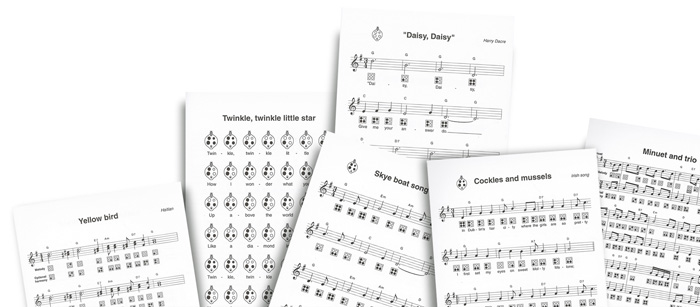
6-hole-ocarina-music-pages